5.26.2009
Bizzare foods
Labels: animal, cruel, disgusting, food, Human, japan, life, scary, Video, weird
5.16.2009
Top 15 Strangest Conditions of the Human Mind

The human mind is a tremendous thing - there are so many facts revealed about it, and so many things which still remain an enigma for us. Science is struggling to explain such strange developments, but still unable to describe their actual origins. Although majority of us are already familiar of a few mental conditions on this list, several others are very strange, unfamiliar and beyond the boundary of logical domain. Here is a collection of top 15 strangest conditions of the Human Mind.
1- Prosopagnosia
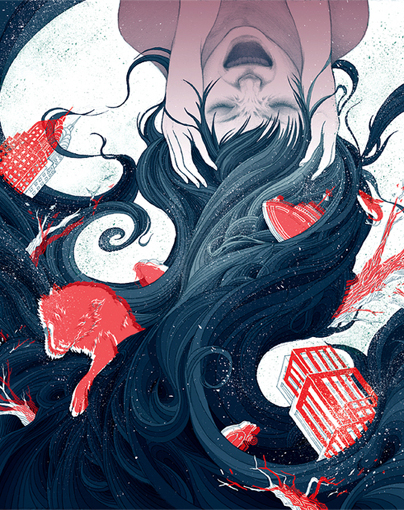
Prosopagnosia is a mental condition in which a person is ineffective to distinguish faces of people or objects that they should know. People going through this disorder are typically capable of using their other senses to recognize people – for instance a person’s perfume, the shape or style of their hair, the sound of their voice, or even their gait. A famous case of this phenomena was mentioned in the 1998 book (and later Opera by Michael Nyman) called “The man who mistook his wife for a hat”.
2- Fregoli Delusion
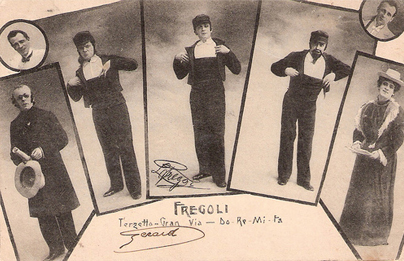
Fregoli delusion is an uncommon mental condition in which a person holds the impression that different people are, in fact, the same person in an assortment of disguises. It is frequently related to paranoia and the impression that the person in disguise is attempting to persecute them. The delusion is named after the famous Italian actor Leopoldo Fregoli who was renowned for his skill to make quick changes of appearance during his stage act. It was first accounted in 1927 in the case study of a 27-year-old woman who thought she was being persecuted by two actors whom she often went to see at the theatre. She reported that these people “pursued her closely, taking the form of people she knows or meets”.
3- Capgras Delusion
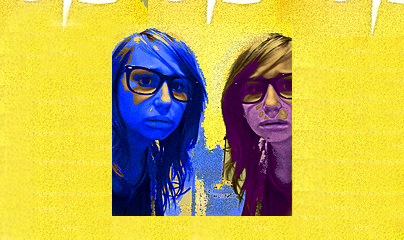
Capgras delusion is a mental condition in which a person believes that a close friend or family member has been replaced by an identical looking faker. This could be associated with the old belief that babies were slipped and replaced by changelings in medieval folklore, and the modern idea of aliens seizing the bodies of people on earth to live amongst us for reasons unknown. This delusion is frequent among those who are schizophrenic; however it can also occur in other disorders.
4- Nihilistic delusion

Nihilistic delusion is a condition whose theme centers on the nonexistence of self or parts of self, others, or the world. A person with this type of delusion may have the false hallucination that the world is ending.
5- Erotomania

Erotomania is a mental condition in which a person starts to think that another person, usually someone of higher status, is in love with him or her. It is, however, rare for people with this type of delusion to try to contact the other person (through phone calls, letters, emails, gifts, and sometimes stalking).
6- L’esprit de l’Escalier
L’esprit de l’escalier (French= stairway wit) is the sensation of thinking of an ingenious counter when its too late. The phrase can be used to portray a comeback to an insult, or any witty, quick remark that comes to mind too late to be helpful—when one is on the “staircase” leaving behind. The German word “treppenwitz” stands for the same condition. In English, the phrasal idiom describes this condition as “being wise after the event”. This condition frequently comes with a feeling of regret at having not thought of the riposte when it was most required or appropriate.
7- Grandiose delusion
In this type of delusion, a person overdraws his / her sense of self-importance and believes that he or she has special powers, talents, or outstanding skills. At times, the subject would believe that he/ she is a celebrity (for example, a rock star or Jesus Christ). Normally a person with this delusion is convinced he/ she has achieved some great accomplishment for which they have not received enough credit or recognition.
8- Presque Vu (Almost Seen)
Presque vu is almost similar to the “tip of the tongue” feeling - it is the strong sensation that you are about to go through an epiphany - though the epiphany rarely happens. The condition of presque vu can be very disorienting, perturbing and distracting.
9- Jamais Vu (Never Seen)

Jamais vu stands for a familiar situation which is not recognized. It is often regarded the opposite of déjà vu and it comprises a sense of eeriness. The observer does not distinguish the situation despite knowing logically that they have been there before. It is usually described as when a person shortly doesn’t recognize a person, word, or place that they actually know. Chris Moulin, a researcher at Leeds University, inquired 92 volunteers to write up “door” 30 times in 60 seconds. He accounted that 68%of his guinea pigs showed symptoms of jamais vu, such as starting to doubt that “door” was a real word. This makes clear that jamais vu might be an indication to brain fatigue.
10- Déjà Senti (Already Felt)
Déjà senti is the mental process of having “already felt” something. This is totally a mental phenomenon and rarely remains in your memory subsequently. A person diagnosed with Déjà Senti has accounted that “What is occupying the attention is what has occupied it before, and indeed has been familiar, but has been forgotten for a time, and now is recovered with a slight sense of satisfaction as if it had been sought for. The recollection is always started by another person’s voice, or by my own verbalized thought, or by what I am reading and mentally verbalize; and I think that during the abnormal state I generally verbalize some such phrase of simple recognition as ‘Oh yes—I see’, ‘Of course—I remember’, etc., but a minute or two later I can recollect neither the words nor the verbalized thought which gave rise to the recollection. I only find strongly that they resemble what I have felt before under similar abnormal conditions.”
You may consider it as the sensation of having just mouthed, but acknowledging that you, actually, didn’t utter a single word.
11- Déjà Visité (Already Visited)
Déjà visité is a rare mental phenomenon and it exemplifies a preternatural knowledge of a new place. For instance, you may have a go at it your way around a totally new town or a place you may have never been before, and knowing that it is not possible for you to have this knowledge. Déjà visité is related to spacial and geographical relationships, while déjà vécu is related to temporal happenings. Nathaniel Hawthorne reported about an experience of this condition in his book “Our Old Home” in which he visited a ruined castle and had eerily known everything about its layout. Later on, he was able to trace the experience to a poem he had read many years early by Alexander Pope in which the castle was precisely described.
12- Déjà Entendu (Already heard)
Déjà Entendu is a sensation in which sounds or voices have been heard in the past.
13- Déjà Vécu (Already lived through or experienced)
Déjà vécu is what most individuals are actually going through when they think they are experiencing deja vu. Déjà vu is the feeling of having seen something before, whereas déjà vécu is the sensation of having seen an event before, but in great detail - such as recognizing smells and sounds. This is also typically accompanied by a very strong feeling of recognizing what’s gonna come next. In my own experience, I have not only recognized what was going to come next, but have been able to tell those around me what’s gonna come next - and I was 100% correct. Well, this is a very strange and unaccountable feeling…
14- Déjà Voulu (Already Wanted)
Déjà Voulu is a sensation of disturbance of memory in which an individual believes that his or her present desires are incisively the same as desires held some time earlier.
15- Déjà Vu (Already Seen)
Déjà vu is the experience of being sure that you have experienced or seen a new situation before - you experience as though the event has already occurred or is repeating itself. This condition is typically accompanied by a strong sense of familiarity and a sense of strangeness, eeriness, or bizarreness. The “previous” feeling is generally assigned to a dream, but from time to time there is a very sure sense that it has really happened in the past.

5.12.2009
The MOM Awesome Song
Labels: amazing, awesome, funny, girls, hilarious, humor, Video
10 Words That Don't Exist, but Should Part II
Accordionated - adj. Being able to drive and refold a road map at the same time.
Aeropalmics - n. The study of wind resistance conducted by holding a cupped hand out the car window.
Mummabolic Chorus - n. When three or more people are singing along to a tune and suddenly discover they are all faking their way through the unintelligible lyrics.
Narcolepulacy - n. The contagious action of yawning, causing everyone in sight to also yawn.
Oreosis - n. The practice of eating the cream center of an Oreo before eating the cookie outsides.
Pajangle - n. Condition of waking up with your pajamas turned 180 degrees.
Prestofrigeration - n. The peculiar habit, when searching for a snack, of constantly returning to
the refrigerator in hopes that something new will have materialized.
Rignition - n. The embarrassing action of trying to start one's car with the engine already running.
Sark - n. The marks left on one's ankle after wearing tube socks all day.
Turfigee and Pedigee - n. The two extreme target points of a rotary lawn sprinkler, TURFIGEE being the safest point at which to walk past, PEDIGEE being the most dangerous.
Tanumbum - n. The sorry side of the Christmas tree that gets placed toward the wall.
Wondracide - v. The act of mangling a piece of soft white bread with a pat of cold butter.
5.09.2009
5.07.2009
7 Sin 7 Glasses


7 DEADLY GLASSES (2008)
Kacper Hamilton design
These red wine glasses are based on the 7 deadly sins. Each glass encapsulates a sin, which is revealed through the ritual of drinking. The ‘7 Deadly Glasses’ are about celebrating passion and encouraging the user to be sinful in a theatrical fashion.
Handmade in England. Limited Edition.


5.02.2009
LINK DUMP!
Sorry for the late LINK DUMP~
Here's for April : )
http://www.sleeptrip.com/300loveletters/2.html
http://www.behance.net/
http://www.michaelhussar.com
http://www.lastritesgallery.com/transgression_opening.php
http://blogspot-blogtemplates.blogspot.com/
http://www.byroglyphics.com/
http://www.extremely-sharp.com/direct/catvideo.html
http://lovexevol.com/?p=books/black_book
http://www.ricstultz.com/
http://maxdesign.com.au/
10 Unusual Japanese Fashions
Japanese fashion usually brings to mind kimono, yukata, or the sailor school uniforms. And for many people around the world who are interested in fashion, the lesser known styles and subcultures of Japan are becoming more widely recognized. The fashions on this list were worn at different times in Japan during the twentieth century and today. With some groups of Japanese teenagers these styles were extremely popular. They were viewed as creative and influential to fashion by some, and looked on with confusion and amusement by others.
Suke means female, and Ban means boss. Sukeban were known for forming all girl gangs, and then committing acts of violence and shoplifting. Sukeban gangs first began to appear in the 60s. They were inspired by the gangs of boys known as Bancho, who hoped to one day join the yakuza. There was quite a range in size for the Sukeban groups, but the largest was known as the Kanto Women Delinquent Alliance, which included 20,000 girls. Rival groups would often get into fights. The Sukeban girls followed strict rules within their own groups, and breaking them would result in lynching. Getting burned with a cigarette was considered only a mild punishment. Sukeban were always seen in their sailor uniforms. They would wear pleated skirts that went down to their feet, and would custom embroider their uniforms.
The Takenokozoku were some of the first to form Harajuku into one of the best known places to view Japanese street fashion. The style was popular in the late 70’s and early 80s, and consisted of neon colored accessories such as beads, whistles, bows, and nametags. A store called Takenoko inspired the clothes worn by the Takenokozoku, which were influence by traditional Japanese fashion. Their outfits were loose and baggy, and usually hot pink or bright blue or purple. They wore robes with kanji characters, and slippers that were comfortable for dancing. Large groups of Takenokozoku would choreograph dances in the streets of Harajuku, playing the current popular music on their boom boxes.
Motorcycle gangs became popular in Japan in the early 60s, and became known as Speed Tribes (Bosozoku). In the 70s, girl motorcycle gangs began to appear. At the time, it was estimated by police that at least 26,000 Japanese citizens were involved in a biker gang. By the 80s, the number of male biker groups began to decrease. However, more and more girl biker groups began to pop up. Yanki, heavily influenced by both the Bosozoku and the Sukeban, often wore sarashi (white cloth wrapped around the chest), an embroidered tokko fukku robe, and a gauze mask. The Bosozoku also owned customized scooters.
The word Gal has been used since the 80s in Japan to describe a girl who likes trendy clothing. Ko Gal was first used in the 90s by the media to describe an eighth grader who made $4000 a month for paid dating with middle aged men. Ko comes from the Japanese word for child, kodomo. Ko Gals tried to look as young as possible, by wearing the cutest accessories they could find. They wore their school uniforms with the skirts shortened, tanned their skin, and bleached their hair. And of course, the famous loose socks. Some girls would use sock glue to keep their loose socks from slipping. Although some Ko Gals of Shibuya did take part in enjo kosai (paid dating), it was not quite as popular as the media made it out to be. As the style spread from Tokyo to around Japan, Kogal movies, magazines, and TV programs became popular. Kogals were never seen without their phones, and they were some of the first avid young technology users in Japan. Ko Gal fashions has evolved into some of Japan’s present styles, such as Hime (princess) Gal. Hime Gal involves wearing expensive brand name clothing, usually of the pink and frilly variety.
Although Ko Gals had tan skin, Ganguro girls took tanning to a new extreme. They would tan their skin every week, and then apply foundation meant for black women. Ganguro literally means “Black Face.” Besides tanned skin, the Ganguro look included platforms shoes, mini dresses, bleached hair, black ink used for eyeliner, blue contacts, and white concealer used for lipstick. A Gal magazine called Egg featured Buriteri, one of the most well known Ganguro, on its cover. The look was popular with groups of teenagers in Shibuya, however, they were often harassed, or viewed by the general public with disgust. By the end of 2001, the trend had died down and tanning salons began to close.
The Manba style, which is still seen today, shares many similarities with Gonguro. The name comes from the word Yamanba, the name of an ugly witch in a Japanese folktale (Yamanba was a term the media used for the Gonguro). Because of the dangers of tanning, they often use dark skin foundation instead. Groups of Manba participate in Para Para dancing, or quick synchronized movements to techno music. Groups of Manba form Gal circles, the most popular one being Angeleek. Boys who spent their time in the same clubs as Manba adopted their own similar style. They became known as Center Guys (after Shibuya’s Center Street). Manba clothes and accessories vary, but are always trendy and garishly bright. Manba makeup consists of white lips and large white circle around the eyes. Colorful decals are placed around the face, and rainbow hair extensions are also popular.
Kigurumin was a short lived (2003 to 2004) and strange fashion phenomenon. Girls who spent their time hanging out in Shibuya and wanted something comfortable to wear began sporting cheap animal costumes bought in party sections of stores. Along with a Pikachu, Hamtaro, or Winnie the Pooh costume, Kigurumin would carry animal purses, cute accessories, and wear manba makeup.
Nagomu was an indie record label created in 1983. The label gained a large fan base. The name for fans, Nagomu Gals, first appeared in the magazine Takarajima. Nagomu Gals favored vintage clothing. They often wore long sleeved t-shirts, thick soled rubber shoes, and knee socks. The term Nagomu Gal was not exactly positive, as they were sometimes viewed as annoying fan girls. In 1989 the Nagomu label was shut down.
Lolita is one of the most popular new Japanese subcultures, and has begun to appear in countries across the world. There are numerous Lolita brands, such as Baby the Stars Shine Bright, Metamorphose, and Angelic Pretty. Lolita fashion began becoming popular in the late 90s, and like the Nagomu style, it has been influenced by music. Gothic record labels in Japan lead to visual kei music, which helped inspire Gothic Lolita clothing. Visual kei refers to bands which wear extremely elaborate makeup and costumes. Lolita is also inspired by the clothing of the Rococo period. The name came from Mana (from the visual kei band Malice Mizer) who called the theme of his clothing line Elegant Gothic Lolita. The popular magazine Gothic and Lolita Bible came out in 2001. There are several different types of Lolita. Gothic Lolita involves primarily black frilled clothing. Sweet Lolita uses pastels, and lots of lace and bows. For punk Lolita, plaids and chains are combined with the frills. Wa Lolita incorporates traditional Japanese clothing, such as kimono, into the look. Accessories that are popular for Lolita include bonnets and headdresses, rocking horse shoes, parasols, petticoats, and frilled knee socks.
Decora is a Japanese street style popular today. In 1997, the magazine FRUiTS was created to display photographs of Japanese street fashion. Aki Kobayashi, the cover model of the first issue, wrote columns for FRUiTS about her style and how she created her own accessories. Soon, girls began making their own eccentric accessories. The style became known as Decora, and its followers traded and sold their accessories in Harajuku. Although each Decora outfit is unique, they all have the similarities of being extremely bright, decorative (hence the name), and cute. Decora girls wear an insane amount of plastic accessories and barrettes, neon skirts, colorful socks, and cute character products.